



Medical
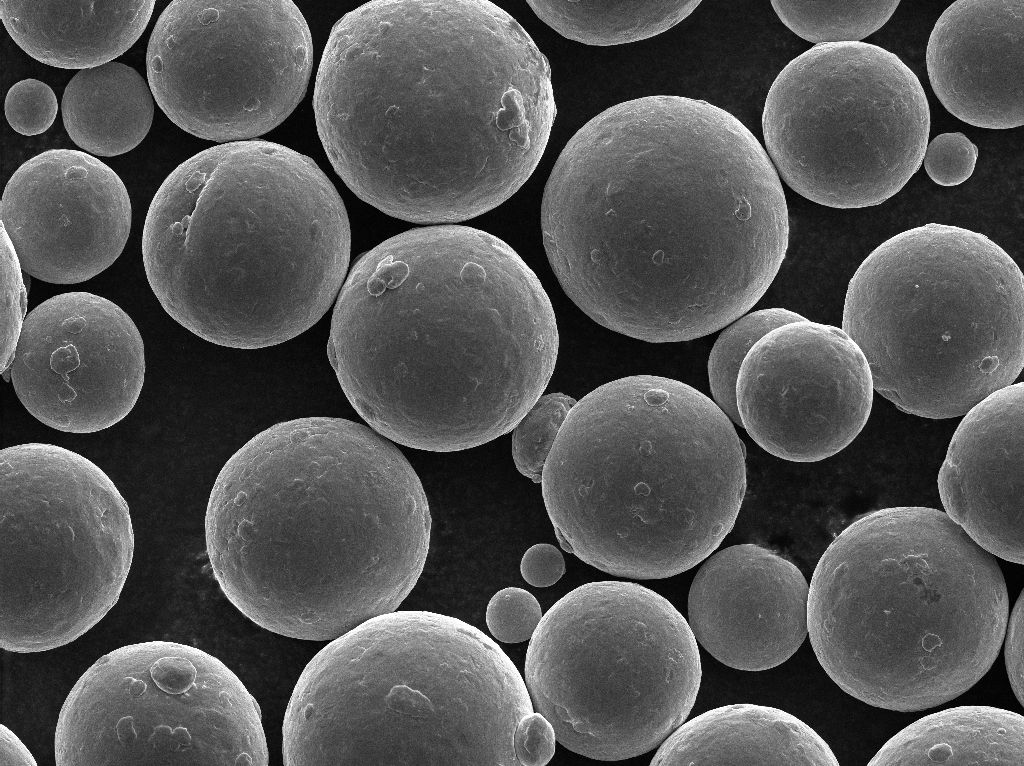
Medical technology requires materials with strict specifications, such as titanium alloys for implants and stainless steels for surgical instruments. We supply both as highly spherical, 0% porosity powders.
| 01 | Implants |
|---|---|
| 02 | Dental technology |
| 03 | Surgical instruments |
| 04 | Prosthetics |
Titanium and stainless steel powders
Grade 23 is the extra-low-interstitial (ELI) version of Ti-6Al-4V, with a maximum oxygen content of 0.13 wt%, compared with 0.2 wt% in Grade 5. Its biocompatibility and fatigue strength make it suitable for implantable medical and dental components. Like our other titanium grades, it is supplied in particle size fractions for laser powder bed fusion (LPBF) and electron beam melting (EBM).
316L is a low-carbon austenitic stainless steel commonly used in medical devices and pharmaceutical equipment. Its chromium, nickel, and molybdenum content provides strong corrosion resistance in chloride-containing media. We supply it in particle size fractions for LPBF and, in a finer fraction, for metal injection molding (MIM).
Explore our material grades and specifications.
Particle morphology, documented for each batch
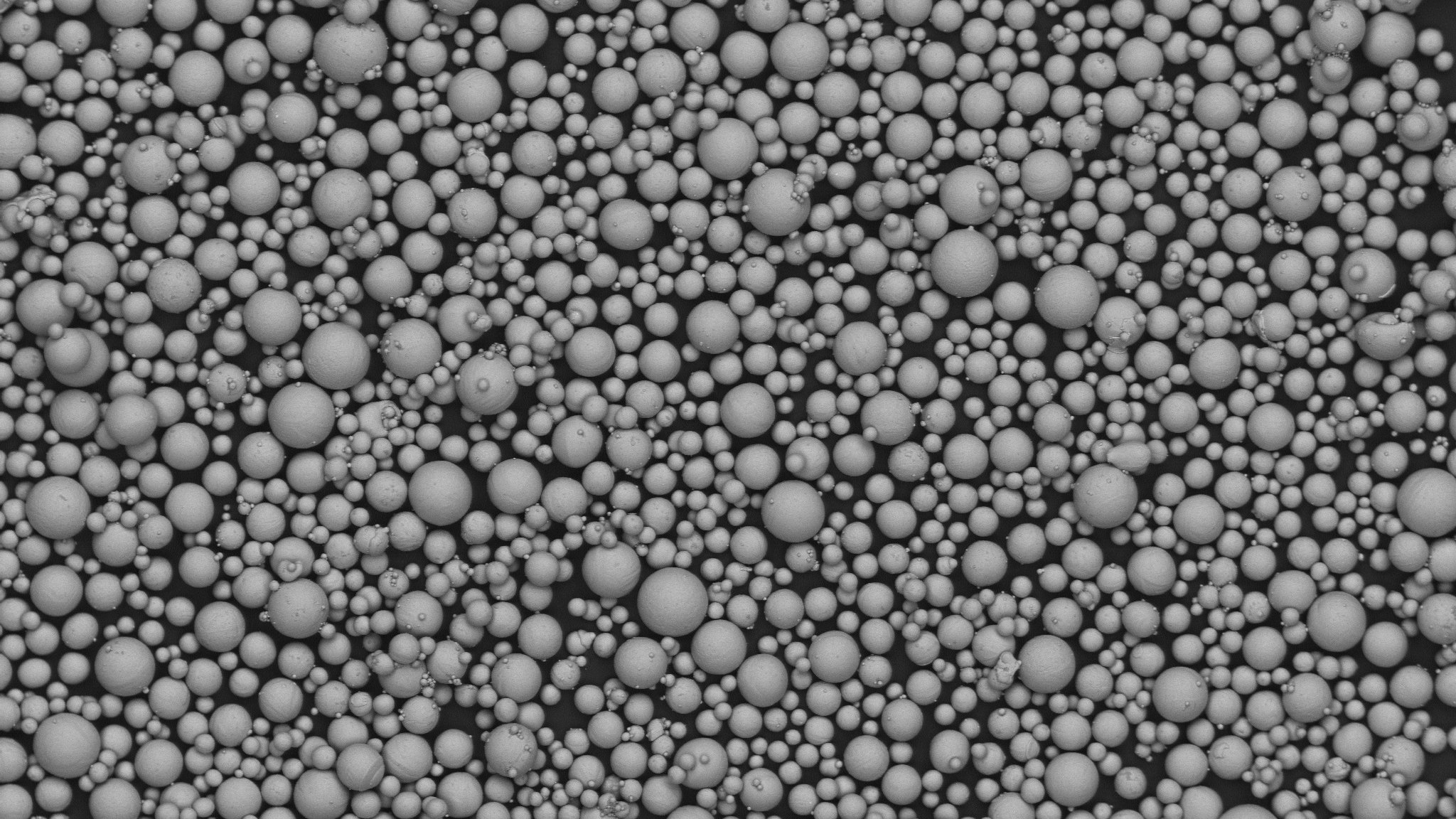
We define highly spherical powder as having a sphericity above 0.90, with 1.0 representing a perfect sphere. Particle shape affects powder bed processes, as more spherical particles flow more easily and form denser powder layers. Our in-house laboratory measures particle shape and size by dynamic image analysis, with each batch’s morphology recorded in its test certificate.
Our powders have 0% porosity. Pores form when atomization gas becomes trapped inside particles. They can carry over into the finished part, reducing fatigue strength. Our technical datasheet includes microsections showing the particles in cross-section.
Frequently asked questions
Are your powders certified for use in medical devices?
No. Our powders are not intended as medical devices and have not been developed, tested, or certified as such under the EU Medical Device Regulation (MDR). If you use them as raw material for a medical device, you are responsible for assessing their suitability and for the device’s conformity assessment and approval. Our ISO 9001 certification applies to our quality management system, not to the use of a powder in a medical device.
Are your titanium grades biocompatible?
Our titanium grades are used in medical applications for their biocompatibility. However, biocompatibility is established for the finished device, not the raw material alone. The U.S. Food and Drug Administration (FDA), for example, evaluates a device’s biocompatibility in its final finished form. This includes the effects of processing and sterilization. It does not clear or approve individual materials.
How do your grades relate to implant material standards?
ASTM F136 and ASTM F138 cover wrought implant materials, including bar and wire. Our technical datasheet lists ASTM F136, the specification for Ti-6Al-4V ELI, among the designations for Grade 23. Our 316L is UNS S31603, while the implant grade specified in ASTM F138 is UNS S31673. Whether the powder meets the requirements of your device is assessed in your own qualification.
Can we review your documentation before qualifying the powder?
Yes. We can provide our general technical datasheet together with a sample certificate from a previous production campaign. The datasheet gives each grade’s chemical composition and powder characteristics. Your quality team can review both before your first order, and each batch you then receive is documented in its own test certificate.
How is the powder protected from contamination?
Production takes place in a dust-free environment, with argon as the atomization gas. Classifying, screening, and packaging can also be performed under argon. This maintains an inert atmosphere and prevents exposure to air between atomization and packaging.
Does titanium powder require an export license?
Yes, when it is exported from the EU. Titanium powder is subject to European or Austrian licensing requirements. The destination and intended use can create further requirements under dual-use rules. A completed end-user certificate (EUC) is needed with every order and for each material, although exceptions can be evaluated.
Partner with Metalpine
We tailor the alloy and particle size fraction to your medical requirements, regardless of which hardware manufacturer you use.