



Metal injection molding (MIM) powder
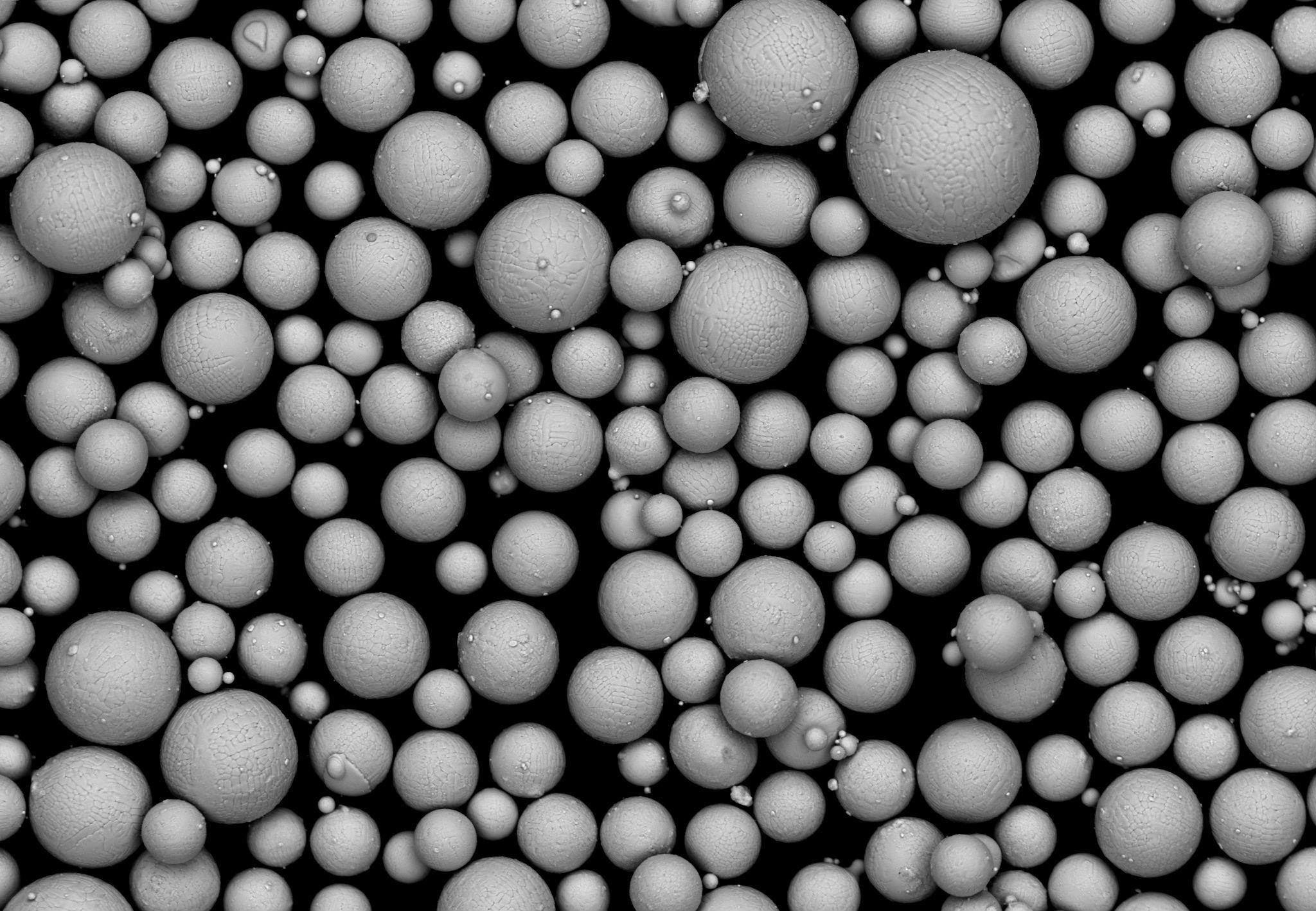
Metal injection molding (MIM) uses fine powder with consistent properties to produce complex geometries in large-scale manufacturing; high sphericity supports higher packing density and repeatable processing for mass production. Our standard MIM fraction is 5–25 µm, documented for every batch; other fractions are available on request.
MIM processes very fine metal powders into complex geometries for large-scale production. Metalpine supplies narrow, reproducible fine fractions for stainless steels and special alloys, supported by documented powder characteristics and production conditions designed for demanding powder-based manufacturing.
- LPBF-SLM
- DED (Directed Energy Deposition)
- EBM
- MIM (Metal Injection Molding)
Powder characteristics for MIM
MIM powder selection starts with the characteristics that influence feedstock behavior, packing density, and repeatable processing. Metalpine supports MIM programs with fine powder fractions engineered for consistent quality and documented batch-to-batch performance.
How metal injection molding works
- 01
Feedstock
fine metal powder is mixed with a binder.
- 02
Injection molding
the feedstock is injected into a mold, as in plastic injection molding.
- 03
Debinding
the binder is removed.
- 04
Sintering
the part is densified at high temperature and shrinks to its final dimensions.
Powder requirements: fine particles (standard 5–25 µm), high sphericity, consistent particle size distribution from batch to batch.
Families that qualify for MIM
Close particle size distribution and high packing density are important for common MIM systems, regardless of the machine manufacturer. Metalpine supports MIM projects with powder production and refinement, screening, classifying, packaging, and laboratory services for material families commonly used in MIM.
Why powder quality matters in metal injection molding
MIM depends on very fine, consistent powders to support homogeneous feedstock preparation and repeatable shaping of complex parts in serial production. Close distribution and strong packing behavior are important where component detail, process stability, and reproducibility all matter.
Metalpine supports these criteria with narrow, reproducible fine fractions tailored to project needs. Spherical powders with low-satellite morphology are especially relevant because they help support reliable powder behavior and consistent processing conditions across production campaigns.
Because MIM requirements vary by part geometry, binder system, and production target, powder selection should match the intended application and process window. Metalpine supports this with toll processing for individual powders, including production and refinement, screening, classifying, packaging, and laboratory testing for project-specific powder specifications.
The Art of Spherical Powder
Metalpine’s proprietary wire-based gas atomization process produces highly spherical metal powders under argon in a controlled production environment. An emphasis on purity, powder morphology, and batch-to-batch consistency supports powder-based manufacturing programs. This is crucial when repeatable material performance and documentation are nonnegotiable.
Production runs under argon, with oxygen-free handling options available for selected requirements. Metalpine also operates a back-up powder manufacturing location at its R&D site in Niklasdorf, 75 km from Graz. Its quality management system is certified to ISO 9001 and EN 9100 for R&D and serial production.
Quality, testing, and documentation
MIM programs often require documented powder characteristics before qualification and production. Metalpine’s in-house laboratory supports this with measurement and testing services for key powder properties, including:
- Particle size distribution with sieve analysis (on request).
- Dynamic image analysis according to ISO 13322-2.
- Laser diffraction according to ASTM B822 (on request).
- Flowability testing according to ASTM B213.
- Apparent density according to ASTM B212 and tap density on request.
- Chemical composition testing.
These services help teams evaluate whether a powder matches the requirements of their MIM process and quality targets. Metalpine records binding batch values in the test certificate, supporting qualification, validation, and documentation workflows.
Questions about powders for metal injection molding
Why are very fine powders important for MIM?
MIM uses fine powders to support the production of complex geometries in large-scale manufacturing. Fine, reproducible fractions are important for consistent processing behavior and part quality.
Which fractions are typical for MIM?
MIM uses very fine powders. Our standard fraction is 5–25 µm; other project-specific fractions are available on request.
Which material families are important for MIM?
Copper, iron, and stainless steel material families are best suited to MIM-related powder applications. Custom alloys are available on request.
Why does sphericity matter in MIM powders?
Strong sphericity supports better powder behavior, higher packing density, and more repeatable processing conditions in demanding powder-based manufacturing environments.
How are powder properties documented?
Metalpine documents relevant batch-specific values in the test certificate and supports qualification with in-house laboratory testing.
What are the requirements of your MIM process?
We’re happy to assist in selecting the powder properties that best fit your system and processing method. Tell us the material group, target fraction, and documentation requirements you need, and we will review the options with you.