



Titanium powder – Ti-6Al-4V (Grade 5 / Ti64), Grade 23 ELI, CP Titanium
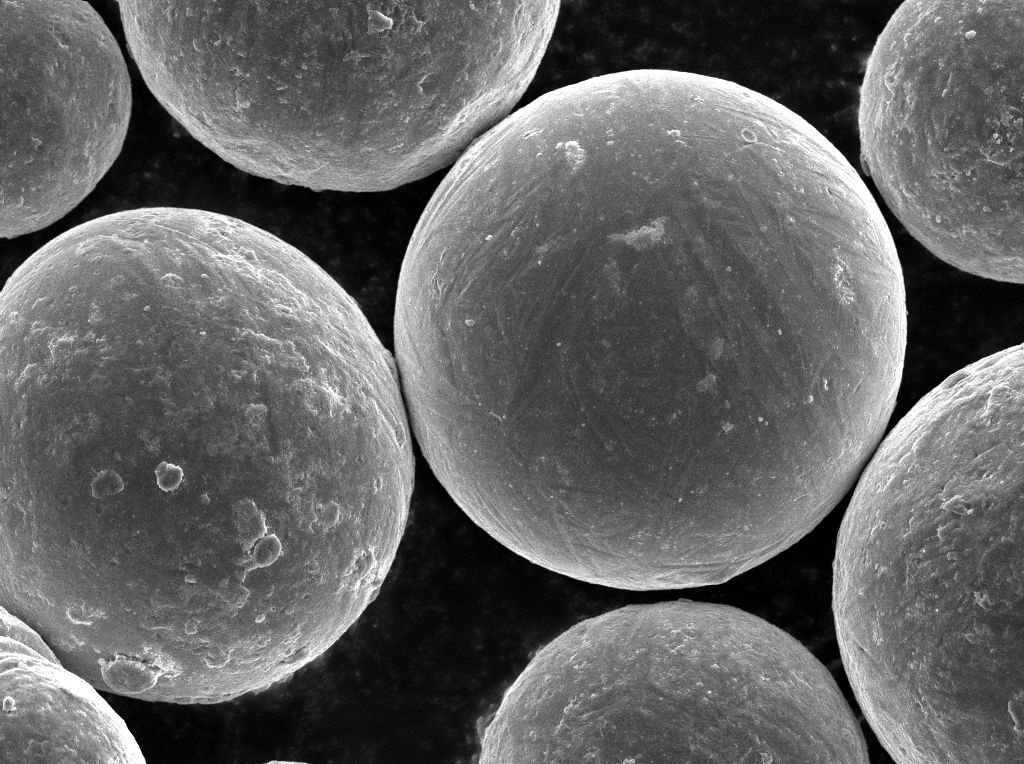
Highly spherical, 0% porosity titanium powders for aerospace, medical, and defense manufacturing – from high-strength Ti-6Al-4V to commercially pure (CP) titanium. Each grade is supplied in defined particle size distributions (PSDs) for laser powder bed fusion (LPBF) and electron beam melting (EBM), directed energy deposition (DED), metal injection molding (MIM) and various other processes.
Find your powder
Which powder fits your application?
Particle size (µm)
Typical for
Standard fractions from our portfolio; other particle size distributions on request.
I work in
using
and need
for
Choose an option to see matching powders.
Available grades and processes
The grades below are our standard titanium offering. If your application needs a different fraction or chemical composition, we agree on the specification with you before the first batch. The binding specification for every batch is stated in its test certificate.
- Grade 5 (Ti-6Al-4V) (3.7165 · UNS R56400 · ASTM B265 / B348) Datasheet for MET Ti Grade 5PDF
- Grade 23 (Ti-6Al-4V ELI) (3.7164 · UNS R56401 · ASTM F136) Datasheet for MET Ti Grade 23PDF
- Grade 2 (CP titanium) (3.7035 · UNS R50400 · ASTM B265 / B348) Datasheet for MET Ti Grade 2PDF
- LPBF
- 15–45 µm
- 15–53 µm
- 20–63 µm
- DED
- 15–53 µm
- 45–106 µm
- EBM
- 45–106 µm
- MIM
- 5–25 µm
| Element | Min [wt%] | Max [wt%] | Remark |
|---|---|---|---|
| Al | 5.5 | 6.75 | |
| V | 3.5 | 4.5 | |
| Fe | — | 0.4 | |
| O | — | 0.2 | |
| C | — | 0.08 | |
| N | — | 0.05 | |
| Ti | Balance |
| Element | Min [wt%] | Max [wt%] | Remark |
|---|---|---|---|
| Al | 5.5 | 6.5 | |
| V | 3.5 | 4.5 | |
| Fe | — | 0.25 | |
| O | — | 0.13 | |
| C | — | 0.08 | |
| N | — | 0.05 | |
| Ti | Balance |
Titanium can be supplied in various fractions e.g. 15–45, 15–53 and 20–63 µm for LPBF, 15–53 and 45–106 µm for DED, 45–106 µm for EBM or 5–25 µm for MIM. Other fractions are available on request.
Documented for every batch
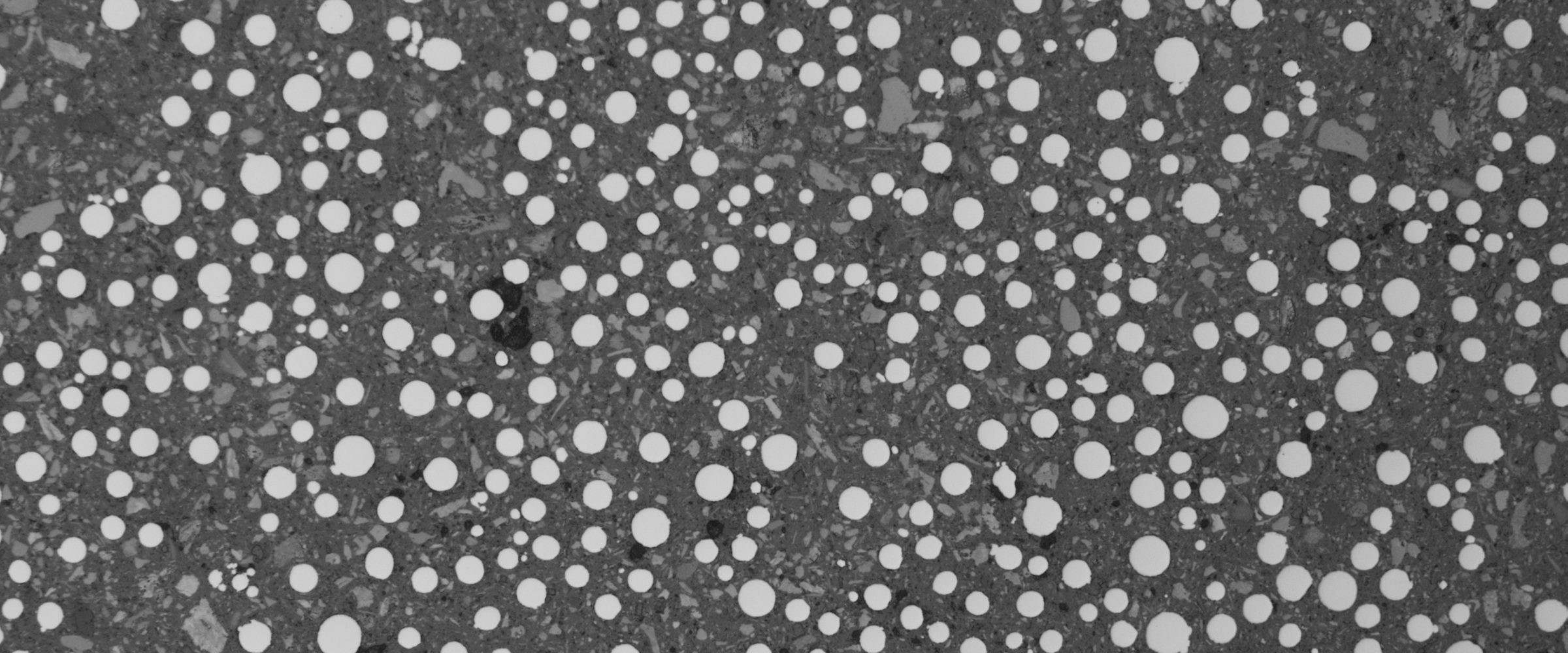
Every batch is tested for the properties listed here, and the results are recorded in its test certificate. Our in-house laboratory measures particle size distribution by dynamic image analysis, along with apparent density and flowability. We define highly spherical powder as having a sphericity above 0.90 (1.0 is a perfect sphere). Our powders have 0% porosity.
| Test | Frequency |
|---|---|
| PSD D10/D50/D90 | per batch |
| Sphericity SPHT3 | per batch |
| Oxygen / Nitrogen (O/N) | per batch |
| Flowability | per batch |
| Apparent density | per batch |
| Chemical composition | per batch |
Additional analyses are available on request
Industries
Grade 5 is the most widely used titanium alloy, valued in aerospace for its high strength at low weight. Grade 23 is its extra-low-interstitial (ELI) variation and standard material for medical applications, with a maximum oxygen content of 0.13 wt% compared with 0.20 wt% for Grade 5. Its lower oxygen and impurity limits improve ductility, corrosion resistance and fracture toughness, and it is widely specified for surgical implants. Where ductility matters more, like for reproduction of the mechanical properties of human bones, commercially pure Grade 2 is typically used.
Explore industry-specific titanium applications:
Frequently asked questions
How do you limit oxygen and nitrogen pickup?
We atomize titanium with argon in our proprietary wire-based gas atomization process. Classification, screening, and packaging can also be carried out under argon. Titanium has a strong affinity for oxygen and nitrogen. Higher levels of either reduce ductility, so we measure both elements in every batch.
Is the powder tied to a specific machine manufacturer?
No. We supply titanium powder for various technologies, production processes and systems regardless of hardware manufacturer, and fractions can be specified to suit your process. We recommend testing the powder on your own equipment before serial production.
Can the powder be used to manufacture medical devices?
That decision rests with the device manufacturer. The powder itself has not been certified as a medical device under the EU Medical Device Regulation (MDR). The manufacturer is solely responsible for assessing its suitability as a raw material and for the testing, conformity assessment, and approval of the finished device.
Can I review a test certificate before ordering?
Yes. We can provide our general technical datasheet together with a sample test certificate based on previous production campaigns. Once you order, the binding specification for each batch you receive is stated in its own test certificate.
What are your lead times?
Powder in stock is ready to ship in approximately 3 to 5 business days. New production is typically ready to ship in 3 to 12 weeks, depending on current orders and confirmation from our raw material supplier. Contact us for the lead time on a specific order.
How is the powder packed and delivered?
Standard packaging units are 5, 10, and 20 kg. We also supply units from 100 g up to about 500 kg and can arrange custom packaging. Our standard delivery term is FCA (Free Carrier), and DAP (Delivered at Place) is also available.
Is titanium powder subject to export controls?
Yes. Exports of titanium powder from the EU are subject to European and/or Austrian licensing requirements, and the destination and intended use can create further requirements under dual-use rules. Where these rules apply, we require a completed end-user certificate (EUC) with every order and for each material, although exceptions can be assessed case by case.
Request a sample or datasheet – Titanium
Tell us the grade, process, and quantity you need, and we will get back to you with an assessment of your requirements.